Contents
If you’re eyeing a foldable but still unsure exactly what happens inside the hinge every time it opens and closes, you’re not alone. This guide breaks down the real engineering behind a flexible phone screen, using two 2026 flagships as examples: the Samsung Galaxy Z Fold7 and Apple’s first foldable, iPhone Duo. By the end, you’ll know what each layer of the screen does, how the hinge survives hundreds of thousands of folds, and why the crease you’ve probably heard about isn’t actually a flaw.
How a Flexible OLED Display Actually Bends
Unlike a rigid smartphone screen, a flexible OLED panel has no separate backlight layer — each pixel emits its own light, the way a tiny LED would, so the panel can be thin enough to flex without shattering. That panel is wrapped in protective layers that do the real engineering work:
| Layer | Function | Typical thickness |
| Ultra-thin glass (UTG) | Glass-like scratch resistance, folds without cracking | 30–100 microns |
| Flexible OLED panel | Produces the image itself | — |
| Polyimide substrate | Flexible plastic base the panel sits on | — |
| Optically clear adhesive | Bonds the layers, absorbs repeated flex stress | — |
This layered build is what makes a flexible screen mobile phone possible: glass on top for a premium, scratch-resistant feel, plastic underneath for the actual bend. Think of it like a hardcover book — the glass is the dust jacket that keeps its shine, the OLED layer is the printed page carrying the image, and the polyimide base is the flexible spine that lets the whole thing open and close thousands of times without cracking.
The Hinge: A Foldable Phone’s Real Engineering Challenge
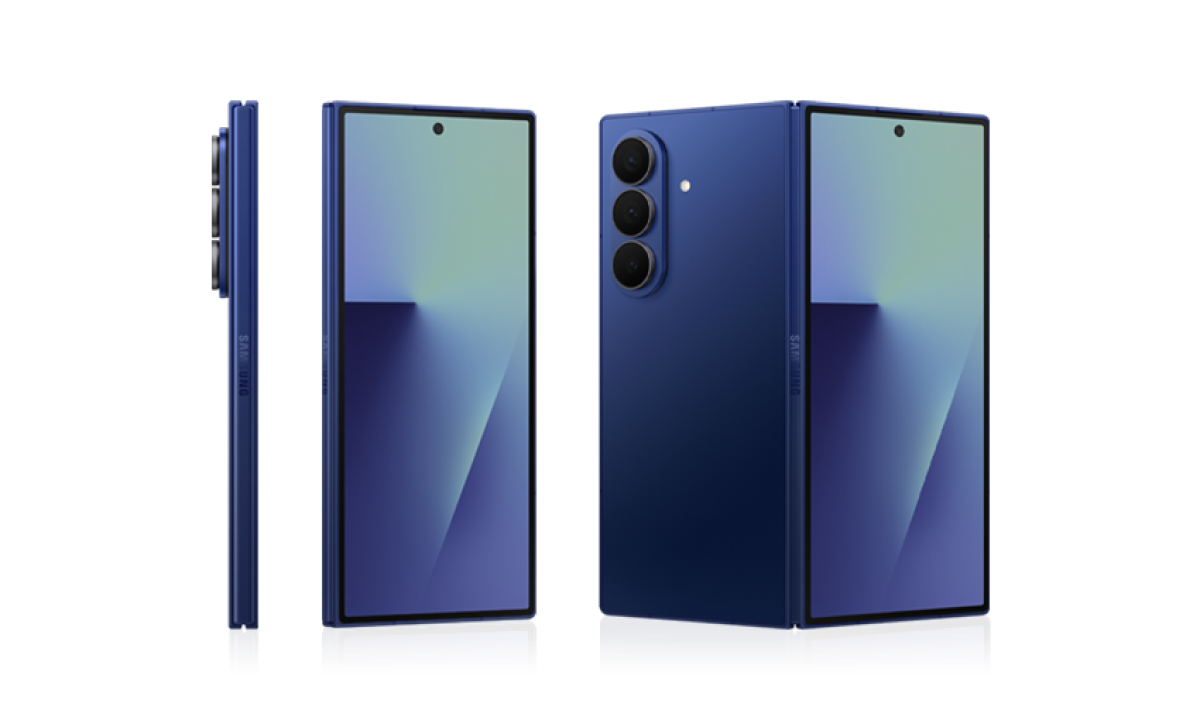
The hinge is the hardest part to engineer: it has to open and close hundreds of thousands of times, hold the phone steady at any angle for video calls, and keep dust and moisture out of a device that is, by definition, full of gaps. Samsung and Apple solve that problem in noticeably different ways:
| Samsung Galaxy Z Fold7 | Apple iPhone Duo | |
| Hinge type | Multi-bar, water-drop shape | Titanium hinge, 100+ components |
| Frame | Reinforced aluminum frame | Grade 5 titanium, 3D-printed hinge cover |
| Glass | Single UTG layer | Dual UTG “sandwich” around the display |
| Water resistance | Splash-resistant | IP68, 6 m for 30 minutes (IEC 60529) |
| Published fold-cycle rating | 500,000 folds (Samsung) | Not disclosed by Apple |
A water-drop hinge spreads the bend across a wide curve instead of a sharp point, which is also why the visible foldable phone crease is smaller than on early-generation devices — not eliminated, just physics managed better. Both hinges also support “free-stop” angles, letting the phone stay propped open on its own for a video call or a hands-free video, instead of only working fully open or fully closed.
Why There’s Still a Crease
When a screen folds, the outer layer stretches while the inner layer compresses. Picture folding a stack of paper instead of a single sheet: the outside sheet always travels a slightly longer path than the inside one, and that mismatch is what your eye reads as a crease. It’s basic material physics, not a manufacturing flaw. iPhone Duo places its display between two UTG layers rather than one, spreading that stress more evenly — an approach several Android makers are expected to adopt as well.
Book Fold vs Clamshell: Two Ways to Fold
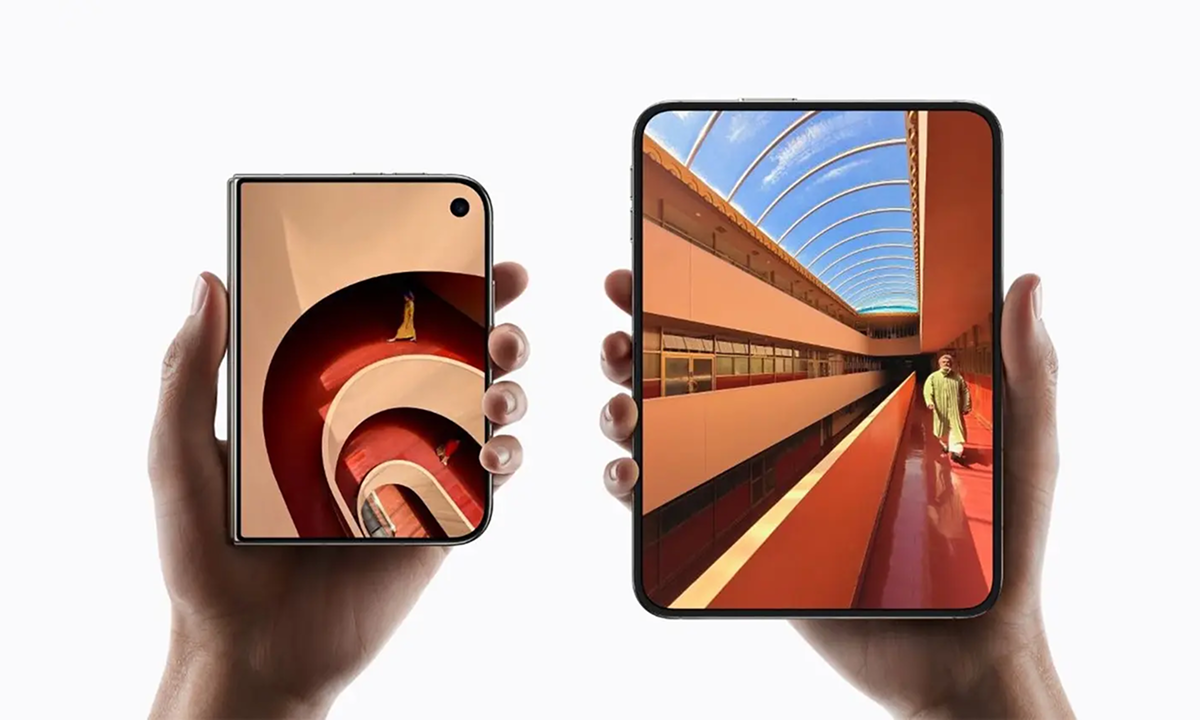
Both the Z Fold7 and iPhone Duo use a book fold: the device opens outward like a small book into a tablet-sized screen, with a smaller cover display outside for quick tasks like messages or the camera. A clamshell fold, by contrast, closes top-to-bottom like classic flip phones — more pocketable in a pocket or small bag, but with less usable screen once unfolded. A book fold suits anyone who wants a tablet-sized screen for video, reading, or multitasking; a clamshell suits anyone who mainly wants a compact phone that still opens into a full display when needed. Neither format says much on its own about how sturdy a foldable phone hinge is — that comes down to engineering, not fold direction.
Foldable Phone Durability: What Actually Breaks?
Most damage on early foldables came from grit trapped in the hinge gap or drops on the exposed crease — rarely the fold mechanism itself, which is precisely what current hinge and glass designs are built to address. Samsung backs the Z Fold7’s hinge with a published 500,000-fold rating and a frame reinforced for daily commuting; see the full Samsung Galaxy Z Fold7 lineup for current configurations.
Is the iPhone Duo Reliable?
Apple hasn’t published an official fold-cycle number for iPhone Duo — worth knowing before you buy. What it has disclosed is concrete: a Grade 5 titanium frame and 3D-printed titanium hinge cover, a hinge built from over 100 components held together with custom flex-relief adhesives, dual Ceramic Shield glass front and back, and an IP68 rating tested to 6 meters for 30 minutes. The dual-UTG “sandwich” design keeps the display itself isolated from direct contact with the moving hinge parts — the main point of mechanical wear on older foldables. In short: the hardware follows the same durability priorities Apple applies to every iPhone, even without a headline fold-count to quote. Browse the current iPhone Duo range to compare storage and color options.
FAQ
Does the crease mean the screen is damaged?
No — it’s the visible result of folding, not a defect, and it doesn’t affect touch response or brightness.
Is a cell phone with flexible screen water resistant?
Most current models carry an IP68 rating, so brief submersion is fine, though the moving hinge still lets in dust more easily than a sealed phone.
Will the hinge wear out?
Independent testing on Fold-series hinges has shown no functional failure well past 100,000 folds — roughly a decade of typical daily use, folding the phone around 100 times a day.
How long does a foldable phone realistically last?
With normal care — a case, avoiding sand or grit near the hinge, and a screen protector rated for flexible displays — both devices are built to match the multi-year lifespan of a standard flagship phone, not a fragile accessory.
Where to Buy in Cyprus
Both the Samsung Galaxy Z Fold7 and the new Apple iPhone Duo are in stock at Prestigio Plaza, with fast delivery available island-wide across Cyprus — from Nicosia and Limassol to Larnaca and Paphos — plus manufacturer warranty and local support on every unit sold.
Sources
- Apple, iPhone Duo technical specifications (IP68 rating, titanium hinge, Ceramic Shield)
- MacObserver, “iPhone Duo Hinge Durability: IP68 and 100 Components, Not a Fold Count” (2026)
- Samsung Newsroom and independent hinge-cycle testing, Galaxy Z Fold7 (500,000-fold rating)
- IEC 60529, international standard for ingress protection (IP) ratings
Stay up-to-date with our news!
Subscribe to our mailing list and be the first to know about new promotions and special offers from the store!